
Spectrometers are among the most important analytical instruments used across scientific research, industrial process monitoring, semiconductor inspection, environmental sensing, medical diagnostics, and materials characterization. While researchers often focus significant attention on diffraction gratings, detectors, and software algorithms, one seemingly simple component profoundly affects overall instrument performance: the spectrometer slit.
The spectrometer slit controls the amount of light entering and exiting the optical system, directly influencing spectral resolution, optical throughput, signal-to-noise ratio (SNR), and measurement accuracy. Selecting the correct slit width is one of the most important design decisions in spectroscopy because it requires balancing competing performance requirements.
At OpTek Systems, we manufacture custom spectrometer slits to customer specifications at high volume with micron precision using advanced laser micromachining technologies.
Understanding how slit geometry affects optical performance can help engineers optimize spectrometer designs for specific applications while avoiding common compromises that can limit measurement quality.
What is a Spectrometer Slit?
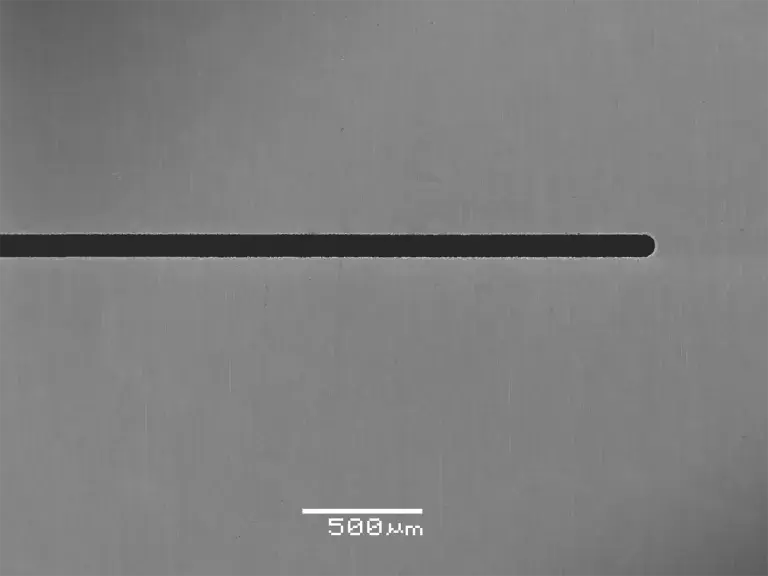
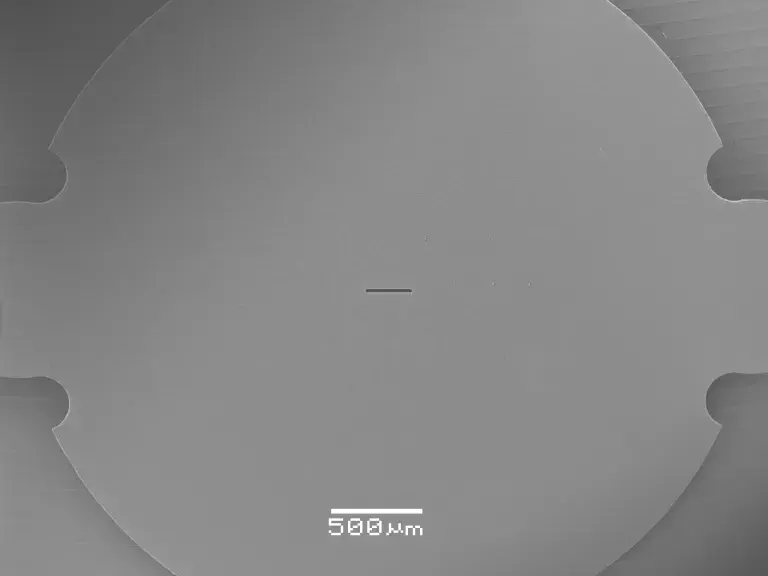
A spectrometer slit is a precision aperture that defines the geometry of light entering or exiting an optical instrument. Most diffraction-grating spectrometers and monochromators contain at least two slits:
- Entrance slit – controls the incoming light beam and defines the optical image entering the system.
- Exit slit – selects specific wavelengths after dispersion.
Although the slit may appear to be a simple opening, it performs several critical functions:
- Defines spatial resolution
- Controls optical throughput
- Reduces stray light
- Influences spectral resolution
- Shapes the instrument response function
In many spectroscopy systems, overall performance is directly tied to the quality and precision of the slit itself.
Why Spectrometer Slits Matter
When light enters a spectrometer, it is dispersed into its constituent wavelengths using a diffraction grating or prism. The spectrometer must then distinguish wavelengths that differ by only fractions of a nanometer.
The slit width determines how effectively the instrument can separate these closely spaced spectral features.
A slit that is too wide allows more light into the system, increasing signal strength but reducing wavelength discrimination. A slit that is too narrow improves spectral resolution but limits the amount of light reaching the detector.
This fundamental relationship drives many of the design decisions made in spectroscopy instrumentation.
The Relationship Between Slit Width
and Spectral Resolution
Spectral resolution describes a spectrometer's ability to distinguish between neighboring wavelengths.
Higher resolution allows engineers and scientists to:
- Separate closely spaced spectral lines
- Resolve fine spectral features
- Improve quantitative measurements
- Increase analytical accuracy
Resolving power can be expressed as:
R=λ/Δλ
Where:
- R is the resolving power
- λ is the wavelength being measured
- Δλ is the smallest distinguishable wavelength difference
Because slit width contributes directly to the effective spectral bandwidth of the instrument, narrower slits generally decrease Δλ and improve resolution.
Narrow Slits
Wider slits provide:
- Greater optical throughput
- Higher detector signal levels
- Faster measurement times
- Improved sensitivity under low-light conditions
However, wider slits can also introduce:
- Peak broadening
- Reduced wavelength selectivity
- Increased spectral overlap
- Lower overall resolving power
The optimal slit width depends on the application's specific measurement objectives.
Wide Slits
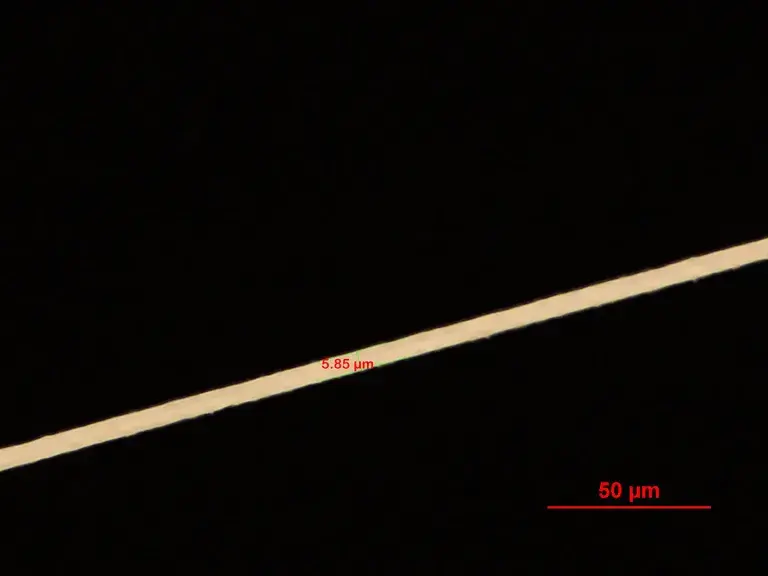
Wider slits provide:
- Greater optical throughput
- Higher detector signal levels
- Faster measurement times
- Improved sensitivity under low-light conditions
However, wider slits can also introduce:
- Peak broadening
- Reduced wavelength selectivity
- Increased spectral overlap
- Lower overall resolving power
The optimal slit width depends on the application's specific measurement objectives.
UNDERSTANDING THE TRADE-OFF BETWEEN RESOLUTION AND SIGNAL-TO-NOISE RATIO
One of the most important considerations in spectrometer design is the balance between spectral resolution and signal-to-noise ratio.
Signal-to-noise ratio is commonly defined as:
SNR=Signal/Noise
A higher SNR produces cleaner, more reliable measurements and improves the ability to detect weak spectral features.
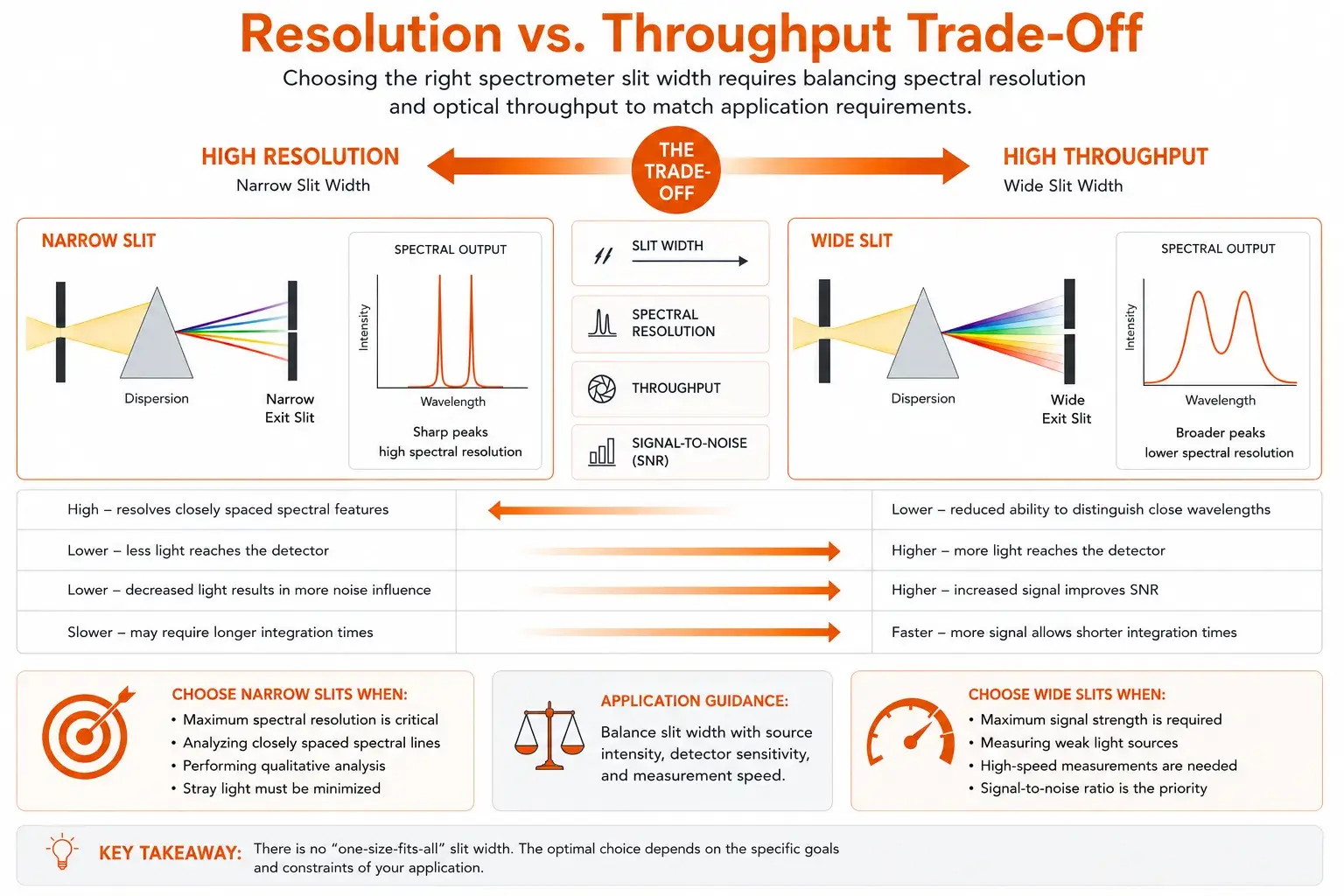
Applications that require precise wavelength discrimination often use narrow slits to maximize resolving power. Examples include:
- Raman spectroscopy
- Atomic absorption spectroscopy
- High-resolution fluorescence analyzing
- Research-grade optical spectroscopy
While narrow slits improve resolution, they also reduce optical throughput, resulting in lower detector signal levels and increased sensitivity to noise sources.
Industrial process monitoring and high-speed measurement systems often prioritize signal strength and acquisition speed.
In these cases, wider slits may be preferred because they:
- Increase optical throughput
- Improve SNR
- Reduce required integration times
- Enable faster measurements
The trade-off is reduced spectral resolution.
Successful optical system design requires balancing these competing requirements based on available light levels, detector sensitivity, measurement speed, and analytical goals.
Spectrometer Slits in Monochromators
Monochromators are optical devices designed to isolate a narrow band of wavelengths from a broadband light source.
They are commonly used in:
- UV-Visible spectroscopy
- Fluorescence instrumentation
- Raman systems
- Calibration equipment
- Tunable illumination systems
A typical monochromator contains:
- Entrance slit
- Collimating optics
- Diffraction grating or prism
- Focusing optics
- Exit slit
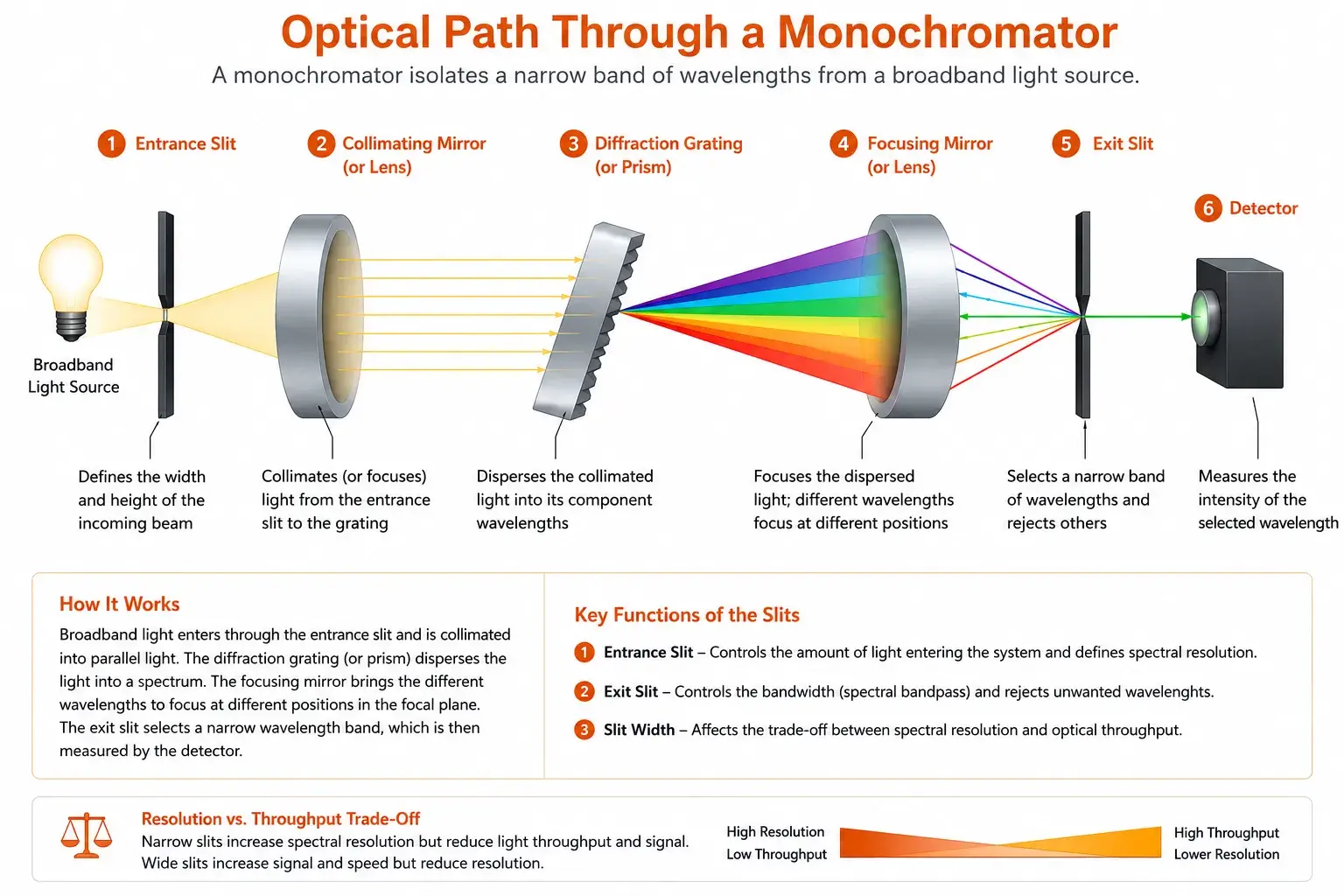
The entrance slit defines the incoming beam width, while the exit slit determines the selected wavelength band after dispersion.
Because monochromator performance depends heavily on spectral purity and wavelength selectivity, slit width and edge quality play critical roles in overall system performance.
Slits in Flash Lamp Systems
Flash lamps generate intense broadband optical pulses and are frequently used in:
- Pump-probe spectroscopy
- Fluorescence excitation
- Laser pumping
- Calibration systems
- High-speed optical imaging
In these systems, precision slits help:
- Shape optical beams
- Improve illumination uniformity
- Reduce stray light
- Control thermal loading
- Enhance wavelength selection when paired with monochromators
The high peak power associated with flash lamp systems places significant demands on slit materials and fabrication quality. Dimensional stability, thermal resistance, and edge precision become especially important for maintaining repeatable measurements.
Precision Apertures in Mass Spectrometry
Although mass spectrometers separate ions rather than wavelengths, precision apertures and slit-like structures remain critical components within ion optical systems.
Applications include:
- Ion beam shaping
- Electrostatic filtering
- Differential pumping stages
- Beam collimation
- Ion focusing systems
Materials such as tungsten, tantalum, molybdenum, and platinum are frequently used because of their:
- High thermal stability
- Excellent vacuum compatibility
- Resistance to sputtering
- Long operational life
The dimensional precision of these apertures directly affects mass resolution, instrument stability, and long-term calibration performance.
Spectrometer Slits or X-Ray Systems
X-ray spectroscopy presents unique challenges because of the extremely short wavelengths involved and the highly penetrating nature of X-ray radiation.
Applications include:
- X-ray fluorescence (XRF)
- Synchrotron beamlines
- Semiconductor inspection
- Crystallography
- Advanced materials research
In these systems, slit and aperture materials must provide:
- High X-ray attenuation
- Excellent dimensional stability
- Radiation resistance
- Minimal scatter generation
Heavy metals such as tungsten, gold, platinum, and tantalum are often selected to achieve these performance requirements.
As X-ray beam sizes continue to shrink and system resolution requirements increase, manufacturing precision becomes increasingly important.
Why Manufacturing Quality Matters
Regardless of application, slit quality directly impacts instrument performance.
An ideal spectrometer slit should provide:

Extremely Straight Edges
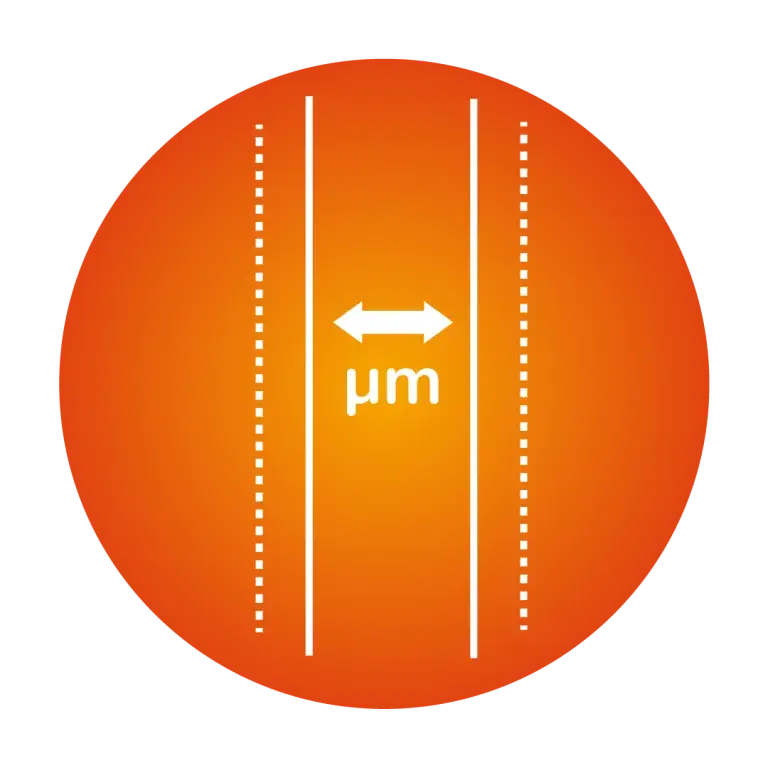
Accurate Width Control

Minimal edge roughness

Low scatter characteristics
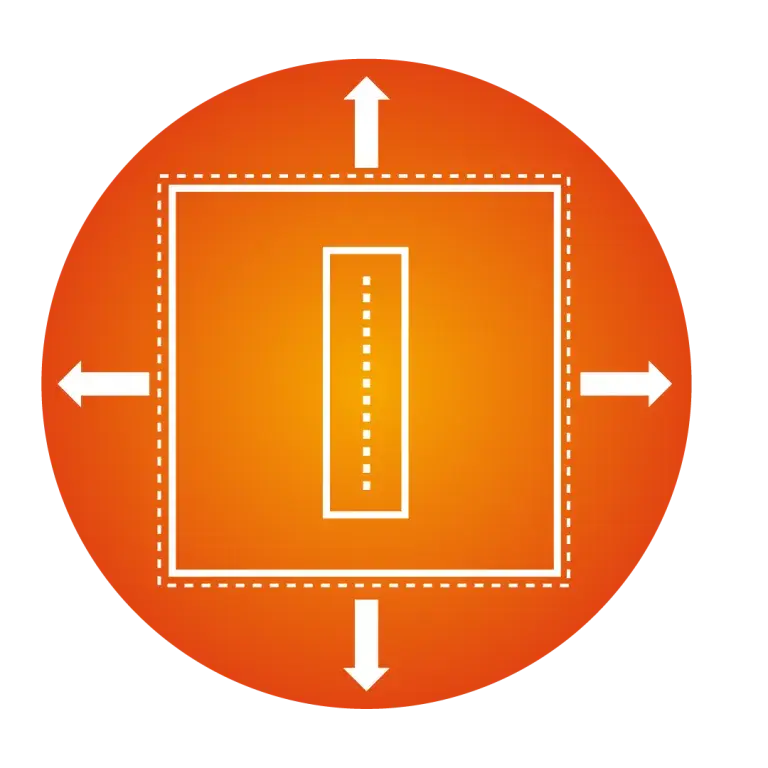
High dimensional stability
Poorly manufactured slits can introduce:
- Stray light
- Spectral artifacts
- Reduced contrast
- Distorted peak shapes
- Measurement uncertainty
As spectroscopy systems push toward higher resolution and greater sensitivity, manufacturing tolerances become a critical factor in optical performance.
The Advantage of Laser Micromachining
for Spectrometer Slits
Modern spectrometer slits are increasingly fabricated using precision laser micromachining technologies.
Compared with conventional machining, chemical etching, or electrical discharge machining (EDM), advanced laser processing offers several important advantages.
EXCEPTIONAL DIMENSIONAL PRECISION
Laser systems can produce slit geometries with micrometer-scale accuracy and excellent repeatability, supporting the demanding tolerances required for high-performance spectroscopy systems.
SUPERIOR EDGE QUALITY
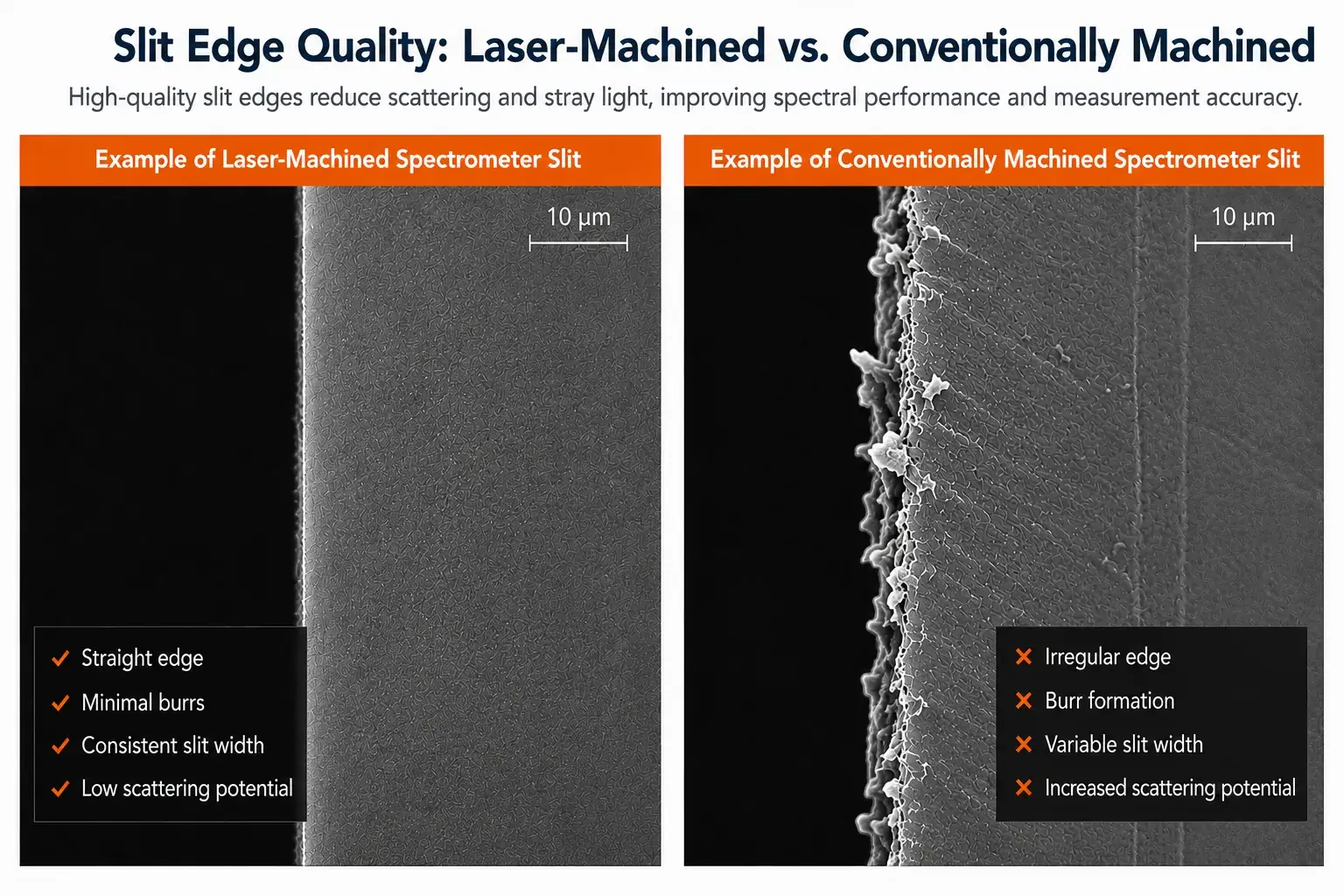
Advanced ultrafast laser processing can create clean, sharply defined edges with minimal burr formation and reduced edge deformation.
This helps minimize optical scattering and improve spectral fidelity.
NON-CONTACT MANUFACTURING
Because laser processing is a non-contact manufacturing method, there is no tool wear and minimal mechanical stress applied to the workpiece.
This improves consistency and reduces the risk of distortion in delicate materials.
MATERIAL FLEXIBILITY
Laser micromachining can process a wide range of materials, including:
- Stainless steel
- Tungsten
- Nickel alloys
- Silicon
- Ceramics
- Thin films
- Refractory metals
This flexibility allows engineers to select materials optimized for specific wavelength ranges, operating environments, and performance requirements.
RAPID PROTOTYPING AND CUSTOM DESIGNS
Laser processing also enables rapid development of:
- Custom slit geometries
- Aperture arrays
- Curved slits
- Specialized optical patterns
This accelerates product development and supports next-generation instrument designs.
Choosing the Right Spectrometer Slit
No spectrometer slit width is universally optimal. Instead, slit selection depends on balancing several competing factors:
| Design Goal | Preferred Slit Configuration |
|---|---|
| Maximum spectral resolution | Narrow slit |
| Maximum signal strength | Wider slit |
| Fast acquisition speeds | Wider slit |
| Weak light sources | Wider slit |
| Closely spaced spectral lines | Narrow slit |
| Minimal stray light | Precision narrow slit |
Many advanced spectroscopy systems now incorporate motorized variable slits and adaptive control algorithms that dynamically optimize performance based on measurement conditions.
Conclusion
The spectrometer slit is one of the most influential components in any optical spectroscopy system. Slit width directly affects spectral resolution, optical throughput, signal-to-noise ratio, and overall measurement accuracy. Narrow slits improve wavelength discrimination and resolving power, while wider slits increase signal levels and measurement speed.
As performance requirements continue to increase across visible-light spectroscopy, monochromators, flash lamp systems, mass spectrometry, and X-ray instrumentation, precision slit fabrication has become increasingly important. Manufacturing quality, edge definition, dimensional accuracy, and material selection all contribute to achieving optimal system performance.
Advances in laser micromachining technology now enable highly precise slit fabrication across a wide range of materials, helping instrument designers meet demanding requirements for resolution, stability, and repeatability in modern spectroscopy applications.
OpTek Systems manufactures custom spectrometer slits to customer specifications, with feature sizes and slit widths controlled to micron-level tolerances. Our global manufacturing facilities support both prototype development and high-volume production, enabling customers to scale from initial design concepts to commercial manufacturing with confidence.