
Fiber assemblies are becoming increasingly important across photonics, medical devices, sensing, telecoms, datacoms, semiconductor systems, fiber lasers and industrial technologies. As optical systems become smaller, more integrated and more performance-critical, the fiber assembly is no longer a simple interconnect. It is often a functional component that directly affects optical efficiency, signal quality, packaging tolerance, reliability and long-term performance.
For optics and photonics engineers, this creates a familiar challenge. A design may work well in principle, but the final assembly is only as good as the processes used to prepare, terminate and integrate the fiber. The geometry of the fiber end, the quality of the cleave, the location of the termination, the condition of the coating and the consistency of each part all influence how the assembly performs in the finished system.
This is where laser fiber processing offers an important advantage. By replacing or supplementing traditional mechanical preparation methods with a precise, non-contact laser process, manufacturers can improve repeatability, reduce variation and create fiber terminations that are better suited to advanced optical assemblies.
For companies developing new fiber-based products, OpTek Systems supports this transition through specialist laser fiber processing services, helping engineering teams move from R&D concepts to repeatable, manufacturable fiber assemblies.
What are Fiber Assemblies?
A fiber assembly is a prepared and integrated optical fiber component designed to perform a specific function within a larger optical system. In its simplest form, this may be a connectorized fiber or patch cable. In more advanced applications, it may include cleaved fiber ends, angled facets, fiber lenses, stripped sections, metallized regions, ferrules, hermetic packages, sensor elements or precisely positioned optical interfaces.
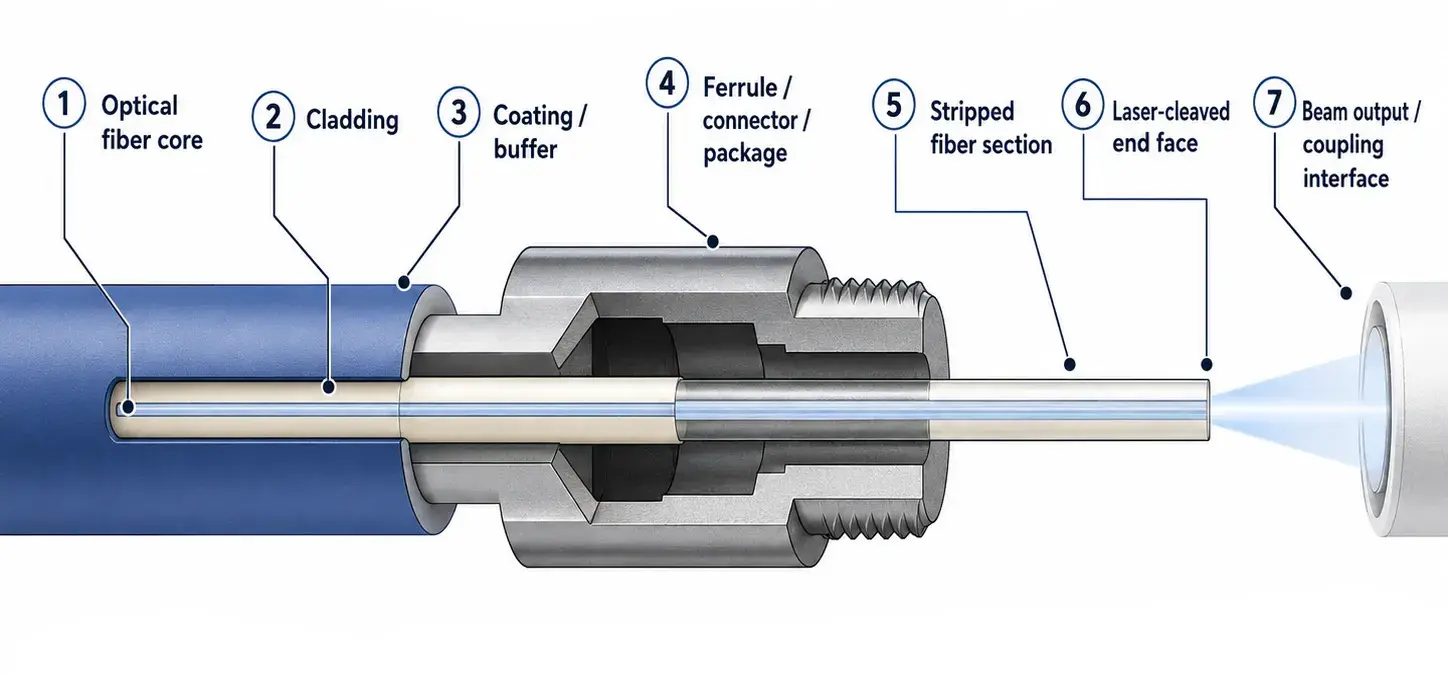
Diagram 1: Cross-section of a fiber assembly
The term “fiber assembly” can therefore cover a wide range of components, including:
|
|
What connects these applications is the need for precision. Optical fibers may be small, flexible and mechanically delicate, but the tolerances around their processing can be demanding. A small defect, angular error or inconsistency at the fiber end can affect coupling efficiency, back reflection, beam quality, package alignment or device yield.
As a result, fiber assembly manufacturing is increasingly dependent on controlled, repeatable optical fiber processing.
Why Fiber End Quality Matters
The fiber end is one of the most important features in many optical assemblies. It is the point where light enters, exits or interacts with another component. In applications involving photonic chips, laser diodes, detectors, lenses, sensors or connectors, the geometry and quality of that interface can have a direct effect on system performance.
Engineers are often concerned with factors such as:
|
|
Traditional mechanical cleaving can be highly effective for many standard applications, but it can become limiting when the fiber assembly requires greater control, unusual geometries, tight positional tolerances or high-volume repeatability. Mechanical processes can also introduce tool wear, part-to-part variation and limitations when working with fibers, coatings or assemblies that do not fit standard processing assumptions.
Laser cleaving provides an alternative approach. Instead of relying on mechanical scoring and breaking, a laser can be used to cut and finish the fiber in a controlled and repeatable way. This can be particularly valuable when the cleave needs to be located precisely relative to another feature, such as a connector, ferrule, coating transition, metallized region or package boundary.
The Role of Laser Cleaving
in Fiber Assembly Manufacturing
Laser cleaving is a precision optical fiber processing method used to terminate fibers with controlled geometry. For engineers developing fiber assemblies, the main benefit is control. A laser process can be configured to produce repeatable cleaves, angled facets and more complex end-face forms depending on the application.
This is especially useful in assemblies where the fiber is already integrated into another component, or where the cleave position must be carefully referenced to a fixed feature. In these cases, the process is not simply about cutting fiber. It is about creating the correct optical interface at the correct location, with the consistency required for production.
Laser cleaving can support several engineering goals:
Improved Repeatability
In R&D, a process may only need to demonstrate feasibility. In production, the same process must work consistently across many parts. Laser cleaving helps reduce variability by using a controlled, programmable process rather than a manual or tool-dependent operation.
Reduced Mechanical Contact
Because laser cleaving is a non-contact process, it can reduce the risk of mechanical stress or damage to the fiber. This is important for high-reliability assemblies, delicate fibers, coated fibers and components where mechanical handling must be minimized.
Rework Flexibility and Reduced Material Waste
Laser cleaving can also support rework by allowing fibers to be trimmed back in very small, controlled increments, typically around 500 µm at a time. By comparison, alternative methods may require 20 mm or more of fiber to be removed before the next termination attempt. This can be especially valuable when working with expensive specialty fibers or high-value assemblies, where preserving fiber length allows more rework cycles, reduces scrap and helps improve overall manufacturing yield.
Precise Positioning
Many advanced fiber assemblies require the termination to be positioned relative to another feature. This may be a connector body, ferrule, metallized section, sensor element or package. Laser cleaving can help engineers control this relationship more precisely.
Support for Advanced Geometries
Some applications require more than a simple flat cleave. Angled cleaves and shaped fiber ends may be used to manage reflection, improve coupling or support specific packaging requirements. Laser processing gives engineers greater flexibility when developing these features.
Scalability from Prototype to Production
A process that works at prototype scale is not always suitable for manufacturing. Laser cleaving offers a route to repeatable production by establishing a controlled process that can later be scaled, automated or transferred into dedicated manufacturing workflows.
Applications Driving Demand
for Precision Fiber Assemblies
The growth in advanced fiber assemblies is being driven by several markets where optical performance and manufacturability are closely linked.
Photonics and Semiconductor Packaging
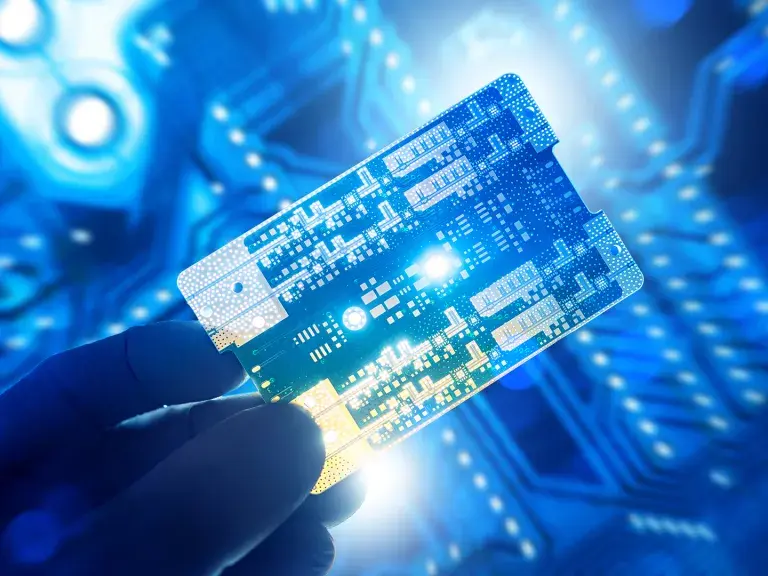
As photonic integrated circuits and optical interconnects become more common, fiber alignment and termination quality become critical. Fiber assemblies used in photonic packaging often need to couple light efficiently into small optical interfaces. This places pressure on end-face quality, positional accuracy and package-level repeatability.
Biomedical and medical device applications
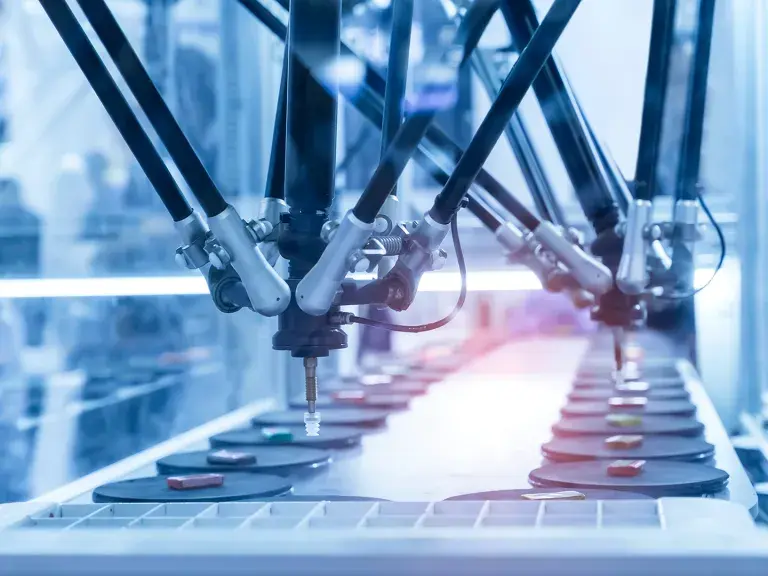
Medical fiber assemblies may be used for light delivery, imaging, sensing, diagnostics or minimally invasive procedures. These applications often require small form factors, clean processing, tight tolerances and high reliability. Laser fiber processing can support the development of consistent, application-specific assemblies without adding unnecessary mechanical stress to the fiber.
Telecoms, Datacoms and Optical Interconnects
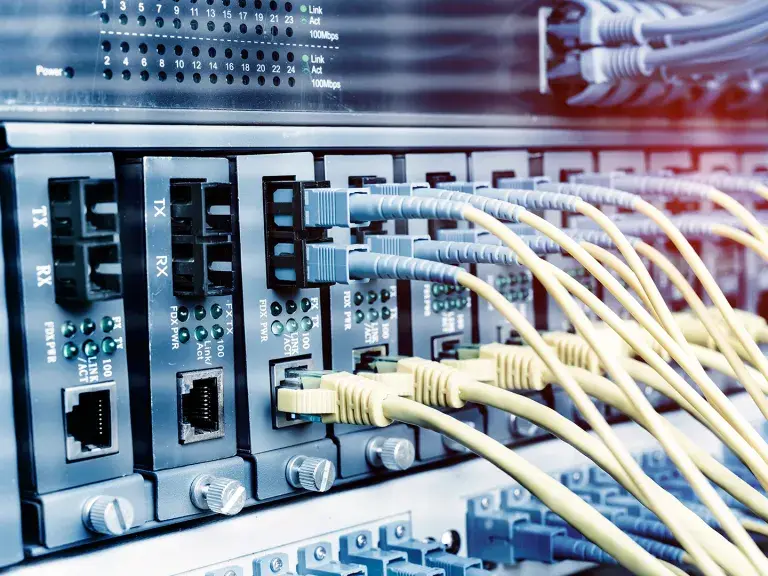
Although optical communications are a mature market, the need for higher density, improved packaging and manufacturing efficiency continues to drive innovation in fiber assembly processing. Laser cleaving can support high-quality, repeatable terminations for connectorized and integrated optical interconnect assemblies.
Fiber Lasers and High Power Optical Systems
Fiber laser systems place demanding requirements on fiber preparation and termination. End-face quality, damage resistance and consistency can all affect performance and reliability. Precision laser processing can support the creation of high-quality terminations for demanding optical power environments.
Why Use a Laser Fiber Processing Service
Building in-house laser fiber processing capability requires process expertise, equipment knowledge, tooling, inspection methods and validation. For early-stage development, low-volume production or application-specific assemblies, this may not be the most efficient starting point.
A specialist laser fiber processing service allows teams to access established expertise without immediately investing in production equipment. This can be particularly valuable when the application is still evolving, the design is not yet frozen or the manufacturing route needs to be proven before scale-up.
Working with OpTek Systems as a service partner can help engineering teams:
- Evaluate whether laser cleaving is suitable for a specific fiber assembly
- Develop a repeatable process for a new design
- Produce prototype or low-volume assemblies
- Improve consistency in fiber termination
- Explore angled, shaped or positioned cleaves
- Reduce process risk before moving toward production
- Bridge the gap between R&D and scalable manufacturing
This service-led model is especially useful for organizations that need technical depth, fast iteration and manufacturability insight, but do not yet need to bring the full process in-house.
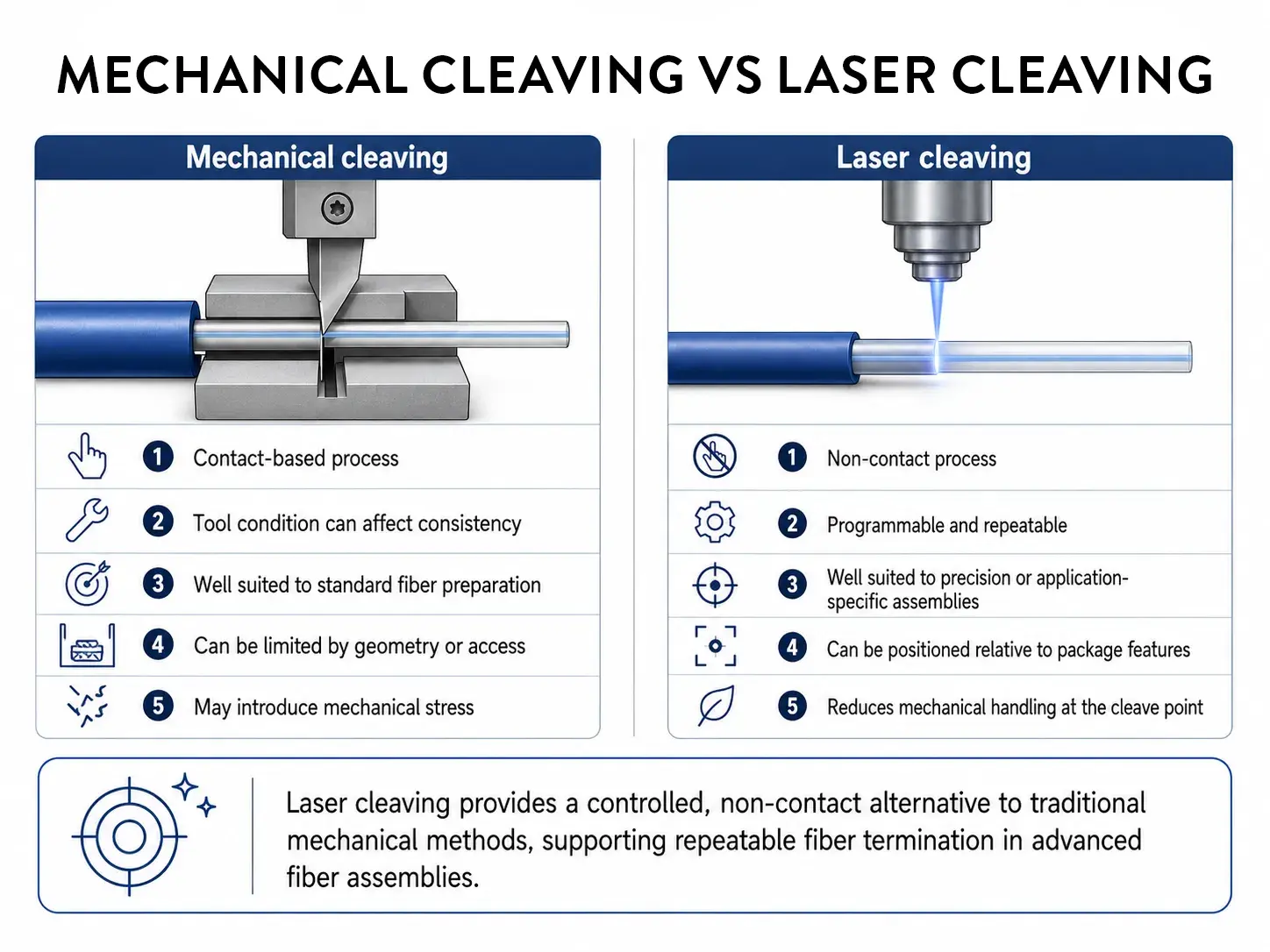
Diagram 2: Comparison of Mechnical Cleaving and Laser Cleaving
From Process Development to Manufacturing Fiber Assemblies
A successful fiber assembly is not defined by one process step. It depends on the relationship between fiber type, coating, cleave geometry, package design, optical alignment, inspection requirements and production volume.
This is why process development matters. Engineers need to understand not only whether a laser can cleave the fiber, but whether the resulting feature meets the optical, mechanical and manufacturing needs of the application.
Key process questions often include:
- What fiber type is being used?
- Is the fiber single-mode, multimode, polarization-maintaining or specialty fiber?
- Is the fiber coated with acrylate, polyimide or another buffer?
- Does the assembly require a flat or angled cleave?
- Is the cleave position referenced to another feature?
- Will the fiber be connectorized, packaged, sealed or aligned to an active device?
- What optical performance metrics need to be measured?
- What level of repeatability is required for production?
- Is the process intended for prototype, low-volume or high-volume manufacture?
By addressing these questions early, engineering teams can avoid developing a design that performs well in the lab but becomes difficult to manufacture at scale.
The Engineering Value of Laser Cleaving
For optics and photonics engineers, the benefit of laser cleaving is not simply that it is precise. The real value is that it gives more control over a critical interface in the optical system.
In a fiber assembly, the fiber end is often where optical design meets manufacturing reality. If that interface is inconsistent, the system may require more alignment time, tighter packaging tolerances, more rework or lower production yield. If the interface is controlled, the assembly becomes easier to integrate, test and scale.
Laser cleaving can therefore contribute to:
- More predictable optical performance
- Reduced dependency on manual skill
- Improved repeatability between parts
- Better control of fiber end geometry
- Reduced mechanical damage risk
- More efficient process development
- A clearer path from prototype to production
Supporting the Next Generation
of Fiber Assemblies
Fiber assemblies are evolving from simple optical connections into engineered components that enable advanced photonic systems. Whether used in medical devices, semiconductor packaging, fiber lasers, sensing systems or high-speed optical interconnects, their performance depends heavily on the quality and repeatability of the fiber processing steps used to create them.
Laser fiber processing gives engineers a more controlled way to prepare and terminate optical fibers for these demanding applications. In particular, laser cleaving can help create precise, repeatable fiber ends that support better optical performance, improved manufacturability and a smoother path from R&D to production.
For teams developing new fiber assemblies, OpTek Systems provides access to specialist laser fiber processing services, process knowledge and application experience. This helps engineers explore what is possible, validate the right manufacturing approach and produce fiber assemblies with the consistency required for advanced optical systems.
As fiber-based technologies continue to expand across photonics, medical, semiconductor, industrial and sensing markets, the ability to control the fiber interface will only become more important. Laser cleaving is one of the key processes helping manufacturers meet that challenge.