Introduction
Advances in medical technology are driving demand for smaller, smarter, and more capable devices that can deliver life-saving therapies and targeted diagnostics, with unprecedented precision. At the heart of many of these innovations are fine metallic wires, critical components in guidewires, stents, neurovascular coils, microcatheters, and sensor systems. As devices shrink and designs become more complex, device manufacturers face increasing pressure to achieve tighter tolerances, superior surface finishes, and consistent mechanical performance.
Traditional manufacturing methods struggle to keep pace with these requirements. Mechanical cutting, chemical etching, and grinding can damage delicate components, introduce inclusion, limit feature resolution and often lack the necessary precision. With the novel and exotic materials often found in medical fine wires, traditional methods can fail to process at all. Laser-based processing offers a powerful alternative. By delivering precise, localized energy without physical contact, lasers can cut, shape, texture, and selectively remove materials with micron-level accuracy, even on wires as small as 10 µm in diameter and components ranging from hundreds of microns to several meters in length.
OpTek Systems is at the forefront of this transformation. Our laser processing solutions, developed on our site leveraging our 25 year history in laser micromachining, empower medical device manufacturers to design and produce the next generation of minimally invasive technologies with confidence, combining engineering precision with production scalability.
Processing Challenges and Material Considerations
Miniaturization, material complexity, and clinical performance requirements create significant manufacturing challenges. Wires below 200 µm in diameter, and in some cases as fine as 10 µm, require extreme precision during processing. Even minor dimensional deviations, surface defects, residual material or heat-affected zones (HAZ) can compromise device performance or reliability.
The complexity of today’s wire constructions further complicates matters. Multi-layer designs often combine polymers, metals, and ceramics, each with distinct processing requirements. In many applications, individual layers must be selectively removed without affecting adjacent materials, and the substrate must remain undamaged. Achieving sharp shoulders, consistent coating thickness, and excellent surface quality are all essential.
These challenges are magnified by the growing use of precious and novel materials and by the need for longer components, sometimes extending several meters, that maintain consistent quality along their entire length. Addressing these demands requires a manufacturing approach that combines precision, selectivity, and scalability, all hallmarks of OpTek’s laser-based solutions.
Laser Processing Capabilities and Techniques
OpTek’s laser processing solutions are engineered to meet the most demanding wire manufacturing requirements. OpTek has access to a full suite of laser technologies ranging from the deep UV to far IR. Multiple ultra-short pulsed laser sources, including 355 nm, 515 nm, and 1030 nm wavelengths, are available in our ISO 13485 certified facilities. We tailor energy delivery to specific materials, enabling precise, clean ablation with minimal thermal diffusion. Pulse durations in the picosecond to femtosecond range virtually eliminate HAZ, preserving mechanical integrity and material properties.
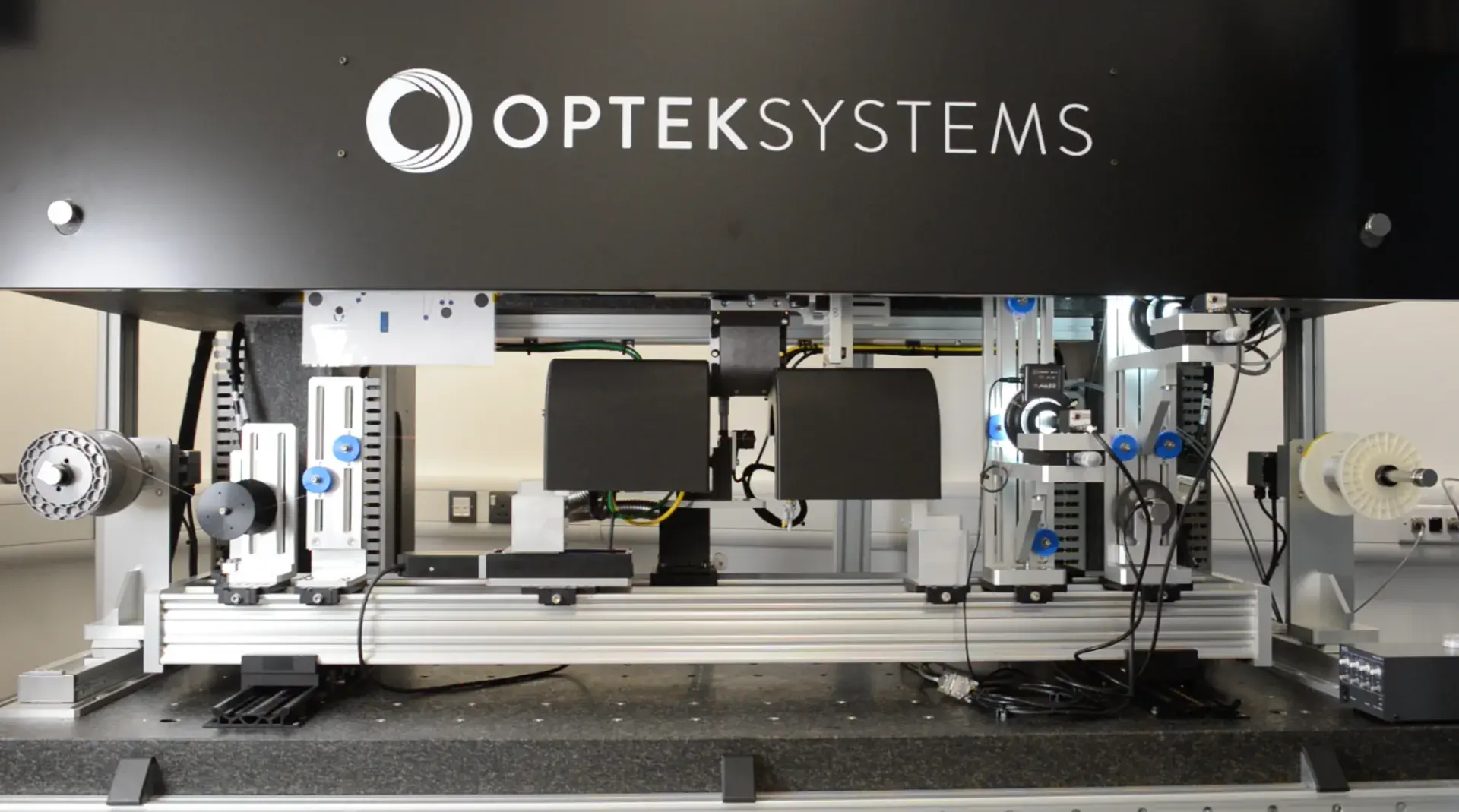
Figure 1. OpTek medical fine wire processing machine
Our systems deliver micron-level accuracy, achieving feature sizes below 5 µm and positional tolerances of up to ±1 µm. We can selectively remove polymer, metal, and ceramic layers while maintaining sharp feature boundaries and avoiding substrate damage. Multiple wavelength options allow us to optimize absorption characteristics for a wide range of materials, including precious and advanced alloys, novel polymers, bioabsorbable materials and even biological materials.
Real-time, on-machine inspection ensures consistent quality and traceability, while galvanometer-driven beam steering combined with high accuracy motion systems, enable rapid, repeatable processing. The result is a manufacturing solution that combines precision and flexibility, ideal for both prototyping and high-volume production environments.
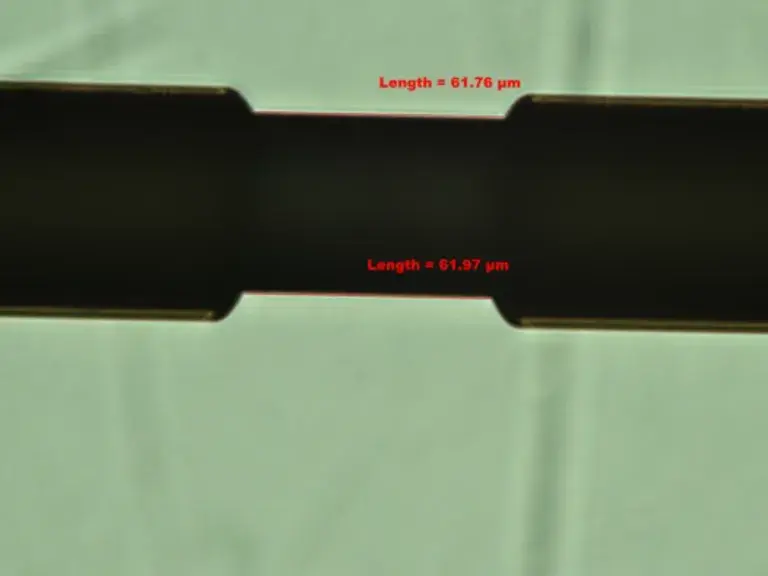
Figure 2. Clean jacket removal from 60µm wire.
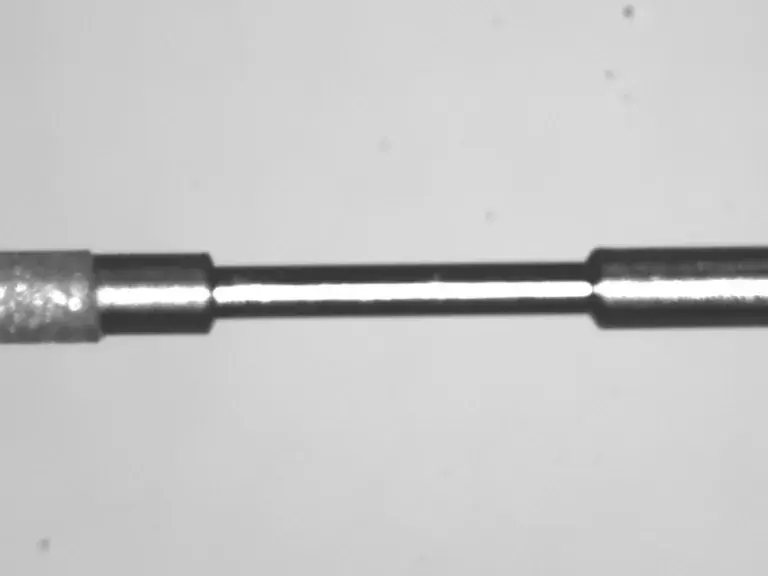
Figure 3. Selective layer removal, metal from Polymer, Polymer from metal.
Application & Process Scalability
Laser processing underpins a broad range of applications in fine wire manufacturing. OpTek’s solutions enable:
- Selective insulation and coating removal: Layer-specific ablation of polyimide, PTFE, enamel, metal oxides, and ceramic coatings without damaging the underlying conductor — a critical step in producing advanced sensors, leads, and catheters.
- Micro-cutting, slotting, and tip shaping: Precision formation of exposure windows, distal tip geometries, and complex coil patterns directly on fine wires without secondary machining.
- Surface texturing and functionalization: Controlled micro- and nano-texturing to improve coating adhesion, modify surface friction, and promote biological integration.
- Micro-welding and joining: Precise joining of dissimilar materials without bulk heating, enabling reliable assembly of delicate sensor and electrode structures.
These capabilities scale seamlessly from development to production. Our systems support both reel-to-reel and reel-to-singulation processing, accommodating spool sizes up to DIN 250. Wire diameters as fine as 10 µm and part lengths ranging from hundreds of microns to several meters can be processed with consistent quality. Customers may supply their own materials, or OpTek can source them as part of a turnkey solution. Combined with multi-wavelength capability and compatibility with precious and novel materials, our technology ensures unmatched process versatility.
Market Overview: Trends in Laser Processing of Fine Medical Wires
The future of medical device manufacturing depends on the ability to produce smaller, more complex, and multifunctional components with absolute precision. Laser processing is at the heart of this evolution, and OpTek Systems is helping manufacturers turn these possibilities into reality.
Our solutions reflect key market trends shaping the industry today:
- Ultrashort pulsed lasers are increasingly the standard for fine wire processing due to their ability to minimize heat input and selectively ablate individual layers.
- Process integration — OpTek’s turnkey systems can combine stripping, cutting, welding, marking, and inspection into a single automated platform, enhancing efficiency and reducing time to market.
- Reel-to-reel automation and spool handling up to DIN 250 support high-volume, continuous manufacturing.
- On-machine inspection ensures traceability and quality at every stage.
By working closely with customers to co-develop optimized designs and processes, OpTek helps medical device manufacturers accelerate innovation, reduce risk, and bring next-generation technologies to market faster.
Summary and Future Outlook
OpTek Systems is redefining what’s possible in fine wire manufacturing for the medical device industry. Our laser processing solutions deliver selective layer removal across polymers, metals, and ceramics; micron-level stripping with sharp shoulders and minimal HAZ; and scalable production workflows, from reel-to-reel to reel-to-singulation. We support spool sizes up to DIN 250, wire diameters as small as 10 µm, and part lengths ranging from hundreds of microns to several meters.
Our systems process precious and novel materials, integrate multiple wavelengths for optimal material interaction, and include on-machine inspection for real-time quality assurance. Whether using customer-supplied materials or sourcing them as part of a turnkey solution, we deliver flexibility, scalability, and confidence.
As medical devices become smaller and more sophisticated, the need for precision, repeatability, and advanced material processing will only grow. OpTek is committed to driving this evolution, empowering our customers to deliver the next generation of life-changing technologies with unmatched precision and reliability.